
Ocean route
Shenzhen / Yantian → San Antonio
Route from southern China to the largest container port in Chile. San Antonio has more berth capacity and offers direct road delivery to Santiago.
Origin
Shenzhen / Yantian
CNYTN
Destination
San Antonio
CLSAI

Transit
29–35 days
Port to port, excluding customs clearance and final delivery.
Departures
2 per week
Departure frequency confirmed in the regular season.
Distancia
≈ 19,900 km
Estimated nautical route across the South Pacific.
Via
Direct
Sin transbordo en el tramo principal.
About this route
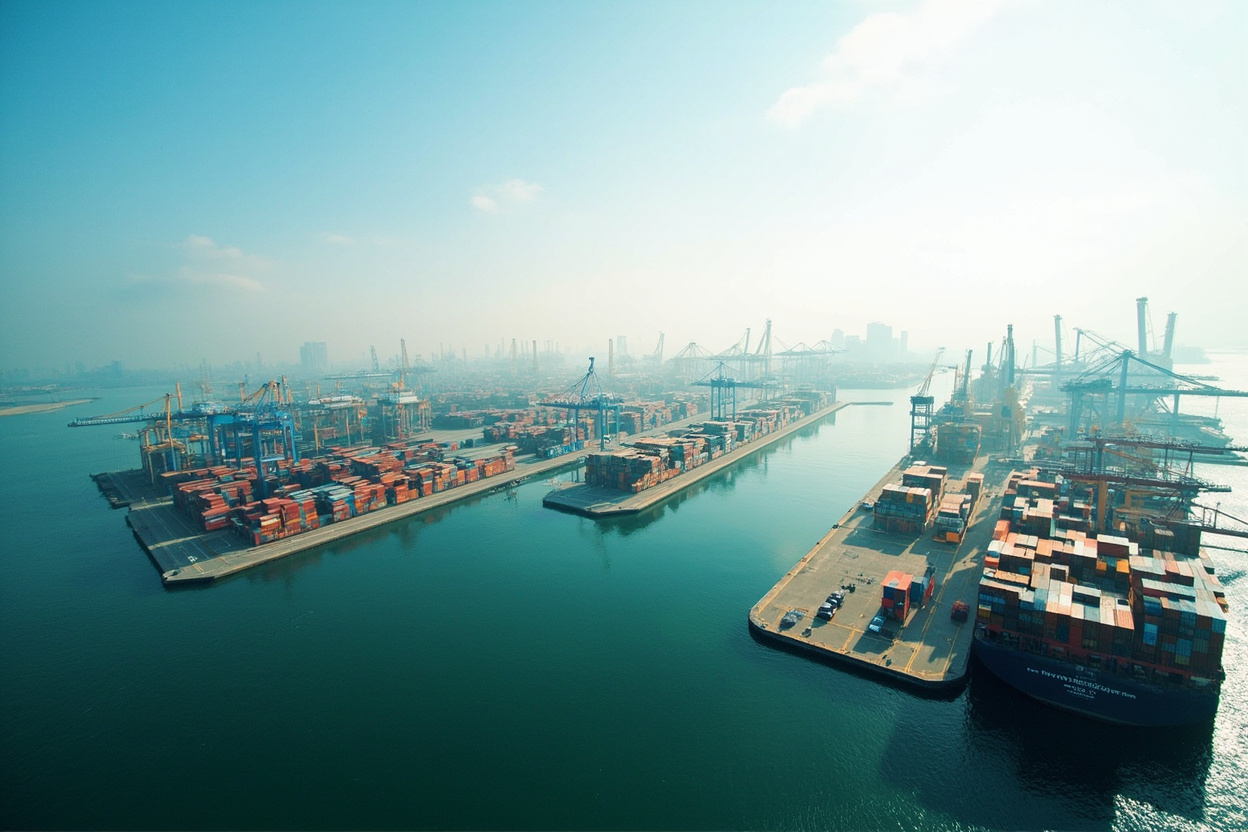
Yantian is the export port for the manufacturing belt of southern China and works as the natural gateway for Shenzhen. The connection with San Antonio is direct across the South Pacific, and San Antonio is the largest container port in Chile, with more operating berths and shorter waiting queues than Valparaíso when the volume is high.
The advantage of the corridor lies in the combination: weekly departure frequency from southern China and, at the other end, the port with the greatest discharge capacity in the country. For project cargo, machinery or large volume destined for Santiago and the O’Higgins Region, it is the route that adds the fewest waiting days.
Two weekly departures from the main industrial hub of southern China.
Discharge at San Antonio: greater container and berth capacity than Valparaíso.
Transit of 29 to 35 days port to port, with no transshipment.
The road connection to Santiago avoids passing through Valparaíso and saves 1 to 2 days.
A slightly higher rate of physical examination on standard cargo: it is worth dispatching with the documents already reviewed.
Route parameters
All values are reference figures and are confirmed operation by operation. The formal quote carries the cargo detail and the space available on the sailing date.
| Parámetro | Valor |
|---|---|
| Port of origin | Shenzhen / Yantian, China (CNYTN) |
| Port of destination | San Antonio, Chile (CLSAI) |
| Route distance | ≈ 19,900 km across the South Pacific |
| Departures per week | 2 weekly departures |
| Transit port to port | 29 to 35 days |
| Transit door to door | 33 to 45 days, including clearance and delivery |
| High season | August in China and the last week of December: documentation cut-offs with margin |
| Customs clearance | 3 to 7 days with complete documentation |
| Physical examination | More frequent on standard-risk cargo: +2 to 5 days |
| Cargo insurance | All-risk on the declared value, premium of 0.3% to 0.8% |
| Duty | 0% with a certificate of origin under the Chile–China Free Trade Agreement (TLC) and a matching HS code |
| Service at destination | San Antonio, with direct road delivery to Santiago |
Operational notes for the route
- Yantian is one of the most congested ports in China in August and in the last week of December: it is worth closing the documentation cut-off with margin.
- When the cargo is of large volume, San Antonio is usually more efficient than Valparaíso because of its greater discharge capacity.
- The road connection towards Santiago from San Antonio avoids passing through Valparaíso and saves between 1 and 2 days.
How the transit time is calculated
The time you see on this sheet is not a statistical average: it is the sum of the legs that determine the date your cargo reaches the warehouse.
- 1 Port to port: the crossing of the South Pacific, with no commercial call.
- 2 Waiting time at destination: between 1 and 3 days from when the container becomes available at the terminal.
- 3 Customs clearance: between 3 and 7 days with complete documents and no physical examination.
- 4 Transport and delivery: between 1 and 3 days from leaving the warehouse to your address.
Costs that are not in the rate
The freight rate covers the sea transport. These items are charged separately and are worth keeping in view before comparing quotes.
- THC and handling at the destination terminal, per container.
- Storage
- Customs broker fees
- Duty and VAT
- Physical examination, if Customs opens it: a clearance surcharge and more days waiting.
- Container detention if the return is not arranged in time.
Frequently asked questions about Shenzhen / Yantian → San Antonio
Why San Antonio instead of Valparaíso as the destination?
San Antonio has more container and operating berth capacity, so for large-volume cargo the discharge is faster and there are fewer queues. In addition, the road connection towards Santiago avoids passing through Valparaíso and saves between 1 and 2 days.
How long does this route take door to door?
Between 33 and 45 days: 29 to 35 days of maritime transit, plus 3 to 7 days of customs clearance and 1 to 3 days of final delivery. Add the physical examination days if Customs opens one.
How frequent is the congestion in Yantian?
Yantian congests especially in August, when the high production season ends, and in the last week of December before Chinese New Year. In those windows it is worth closing the documentation cut-off with several days of margin.
Is it a direct route or does it involve transshipment?
It is direct across the South Pacific. If the carrier triggers a transshipment for lack of space, transit can extend by up to 4 additional days; we confirm this in the quote for each shipment.
What duty does my cargo pay on this route?
Duty does not depend on the route but on the HS code and the certificate of origin. With a certificate of origin under the TLC and an HS code matching the commercial invoice, duty stays at 0%; without that document, the general duty of the fraction applies.
Is this route suitable for project cargo or machinery?
Yes, it is one of the best: San Antonio handles project cargo and machinery better because of its greater berth capacity. That said, this type of cargo requires an open top or flat rack container, and it must be declared on the shipping document.
Other routes in the network
Shanghai → Valparaíso
28–34 days · 3 departures per week
Ningbo → Valparaíso
30–36 days · 2 departures per week
Qingdao → San Antonio
30–36 days · 1 departures per week
Need a different combination?
We work with departures from the five Chinese ports to Valparaíso, San Antonio and Iquique. Combinations without published frequency are quoted subject to confirmation.